Liv Boyle — In Conversation
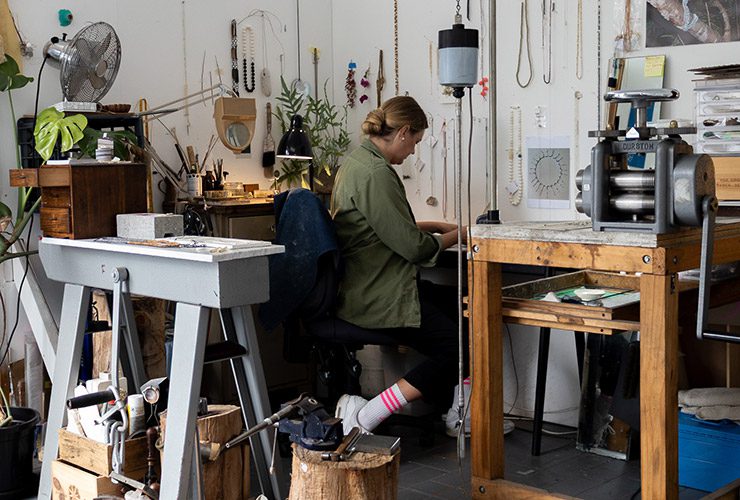
In her new exhibition, ‘Shooting Stars & Electric Clouds’, Liv Boyle draws on her experience at Camillo House, an artists’ retreat on Victoria’s Mornington Peninsula—where, under a blanket of stars, she watched as a storm unfurled along the dark horizon, visible only by lightning, strobing relentlessly, rave-like, for hours.
In the aftermath, the shoreline becomes a composition of all that drifts. Materials moved, broken, tangled, rearranged.
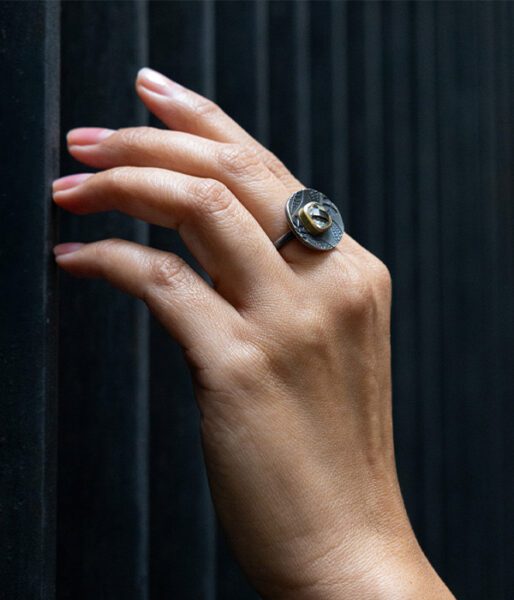
Crafted with precious and non-precious materials, Liv pairs fine silver with paper bark and pearls with beach plastic, finding that each needs the other to carry the story. Each work becomes a relic of place, created from the landscape and in response to it.
In this conversation, Liv reflects on the making of this collection, the emotional and sensory experiences that influenced the work, and the power jewellery holds through quiet connections.
She would like to acknowledge the Traditional Owners of the land that inspired this body of work, the Bunurong People, and to pay respects to elders past and present.
—
—
This collection was created in response to your time spent at an artist retreat at Blairgowrie’s Camillo House. Can you share some of your time spent there?
There were so many moments when it felt like I was there at just the right time.
The first night was quite windy on one side of the house, so I stepped outside to see what the weather was doing and saw a massive, towering kind of thundercloud towards the bay. The trees were making their lovely rustling and whistling noises, and the huge tower of a cloud was lighting up; it was amazing.
I decided to watch the storm from the darker, sheltered side of the house, and without the wind, it was a completely different scene and when I discovered the storm was unfolding along the whole horizon. And because there was no light pollution, I could only see the horizon when it was sparking up with the lightning, flashing every few seconds, and I just sat there watching for hours because it was so beautiful.
It felt emotional. I’ve never watched a storm for that long and with that kind of intensity, and there was this energy in the air that’s one of those things that’s really hard to describe. I could hear micro bats all around me, and the wind in their wings was making a weird sort of whirring noise. They were zooming around, catching the moths, and all of the nightlife was electric.
I was in this really luxurious position of being able to just sit and watch it and be sheltered. It set me up for the next couple of days to just observe and be in the moment.
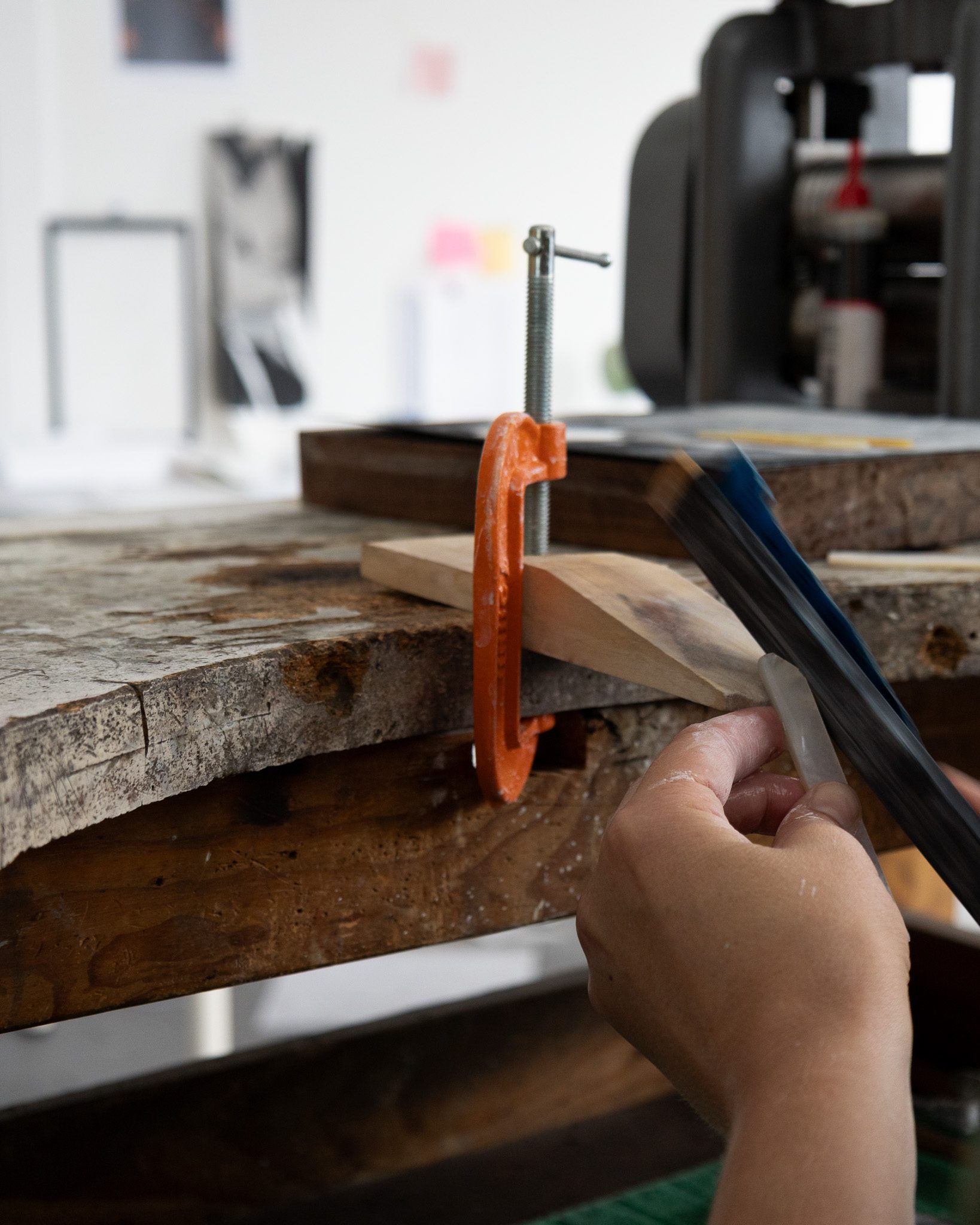 This body of work is responding to an extremely visceral experience. How do you begin to distil the essence of a raging storm into a piece of jewellery?
For me, it starts with the palette of the landscape and grouping everything in my mind, like the layers of weathering on everything from the vegetation to the rocks, and raw materials and textures as well.
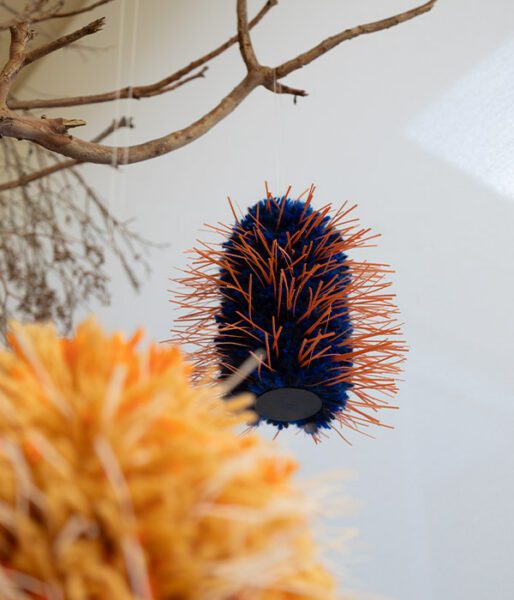
I knew I needed to make something that represented that moment of the lightning storm, and how the light changed in the following days. Whether it’s broad daylight or twilight, you’ve got the sandstone, iron and the ochre—those really red and sienna tones of the ground beneath you. And then you’ve got the really muted tones of the shrubs and sun-bleached, twisted woods, you’ve got a palette if you’re just looking. So, that’s where I start to work from, and I think that’s why the Lionfish piece has all of those elemental colours in there.
It’s one of those things you kind of chase, trying to recreate or evoke a feeling of a place.
You’re using a broad range of materials in this collection, from traditional materials like silver, gold, and pearls, to alternative materials like paper bark and beach plastics. What was your intention in choosing these materials?
I think it’s necessary to have this kind of juxtaposition between precious and non-precious; it’s something I always try to play with. I like bringing down the preciousness of something like a pearl that’s very pretty and mixing it with something toxic or terrible, like the nurdles (beach plastic).
There’s something quite grotesque about that kind of combination, which I like. I like that tension. I feel they almost need each other to carry that narrative.
One of the main components of sand is shell, or calcium carbonate, but now what you find almost everywhere are nurdles and beach plastics that have been broken up into pieces too small to even pick up. I can’t always collect what I see anymore, and I spent a long time doing that, so with this work, I’m trying to find a new way of telling this story.
Beach plastic, for me, is almost ubiquitous; I’m not shocked by it anymore. It’s just what’s there, and nearly everywhere you go.
It’s an issue most people are aware of now, so it’s not about calling from the rooftops that this is happening anymore. This is what I’m seeing, and this is how I can represent it in my work. It’s just another material now, and if I pair it with materials that are beautiful and draw you in, then maybe that’s another way of engaging with the issue.
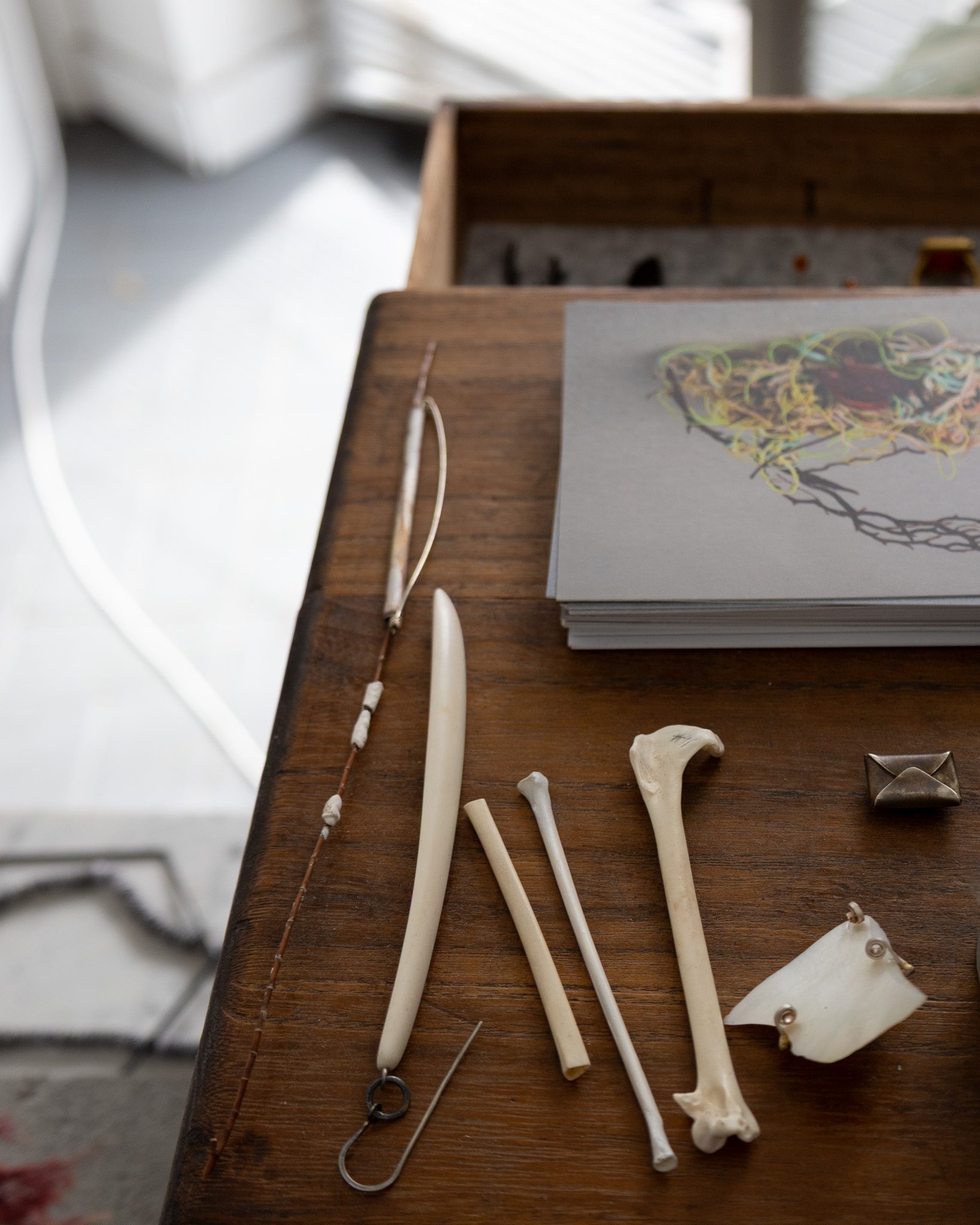
You’re often found along rivers, lakes, and coastlines – why are you so drawn to these bodies of water?
It’s normal for me, it’s where I go. I grew up by the beach, and I think it’s influenced my work quite a lot, because that’s the environment that I always try to return to, to reset.
Rivers lead to lakes or the ocean, you know, and I love the connection between bodies of water. I think I find them interesting in terms of my work, because they are sites of like change and flux, and I find that a really fertile place to work. Places where you can see the weather transitioning from the water to land, a lot happens there.
You referred to the “blue machine” in your artist statement. Can you tell us how it felt to experience weather and ocean reacting to one another in real time?
Blue Machine is the title of a book I’m reading by Helen Czerski, which is where the term comes from. I found it really exciting because something I’ve thought about for a long time is if you’re spending any time by the ocean, certainly making work with materials from those environments, then you’re really conscious of the weather. The weather is what is bringing in the materials that you’re beach combing in the first place, but it’s also just such a huge part of the experience of being there.
I think it’s just something to do with the interconnectedness of the whole system.
Czerski wrote “sea surface temperatures are constantly sculpting global weather patterns” and it was like, yeah, of course they are. The ocean drives everything else in a way, everything we experience, whether you’re in the city or the outback, it’s like a nursery for all storms and all weather systems everywhere.
I enjoy thinking about those huge ideas by looking at the small, even micro, things.
Your work explores the connection between people and planet, but also presents a confronting reality. What do you hope people feel when they see this collection?
I think I want people to feel like they’re at the beach, or to be transported to a place that might represent that way of being in nature, in the elements, and feeling small, but also a part of things.
A quiet connection with the environment is what I hope to capture.
I want to make work that people are happy wearing. I don’t want to make work that’s devastating to look at.
I feel like I’ve done that a couple of times, and jewellery needs to be something that can be worn and held. I think the work can be shut down if it’s too overt. I think first you need to be attracted to the work. You need to have a connection with it, and then you start feeling comfortable thinking about what it means. And that’s a way in that’s more powerful than a work that’s trying to scream something at you.
Not all of the work uses or is about beach plastics, but for those pieces, in particular, wearing them is to acknowledge that it’s there.
It might be something you have a conversation about, or something you look for yourself next time you’re at the beach. Can you spot a nurdle from a piece of sun-bleached seaweed that looks almost identical?